I recently returned from a trip to Tamil Nadu, India, where, among other things, I was interviewed on Sun TV. It’s the highest-profile interview I’ve been invited to give so far, and the night before recording it, I couldn’t fall asleep.
Part of the reason was simply nerves. The interview would be in Tamil, so I began rehearsing answers to questions they’d likely want to ask, which only made me more awake and more nervous.
But another part had to do with wanting to make good use of the opportunity. I have a long and deep ambivalence about modern forms of fame. Years ago, when I read Daniel Boorstin’s definition of celebrity, penned in 1961, I thought he captured something essential: “A celebrity is a person known for his well-knownness.”
Which is to say, not for his achievements, or character, or substance, or wisdom.
Renown
At the same time, as a student of the Kural and of classical Tamil literature, I also know a much older and far more profound ideal: that of being known for generosity and goodness. For Tiruvalluvar, this renown was one of the highest achievements in human life. He went so far as to say, in kural 236:
If you appear appear with renown–better not to appear
Than to appear without it
And when you understand that by “appear” Tiruvalluvar means “appear in this world,” “be born in this world,” you see how important this quality is for him.
So in the midst of my midnight tossings and turnings, I took time to meditate and reflect and pray about what I might share. And around 3:00 in the morning, I suddenly realized I could offer a reflection and story, not about me, but about what I myself find worthy of renown.
Inclusivity and Hospitality
Usually in interviews, when asked what I appreciate most about Tamil culture, I’ve said I’ve been amazed, and continue to be amazed, by Tamil traditions of hospitality. That’s still true. Even this last trip, I was overwhelmed by all the meals put together in my honor, served on bright green banana leaves.
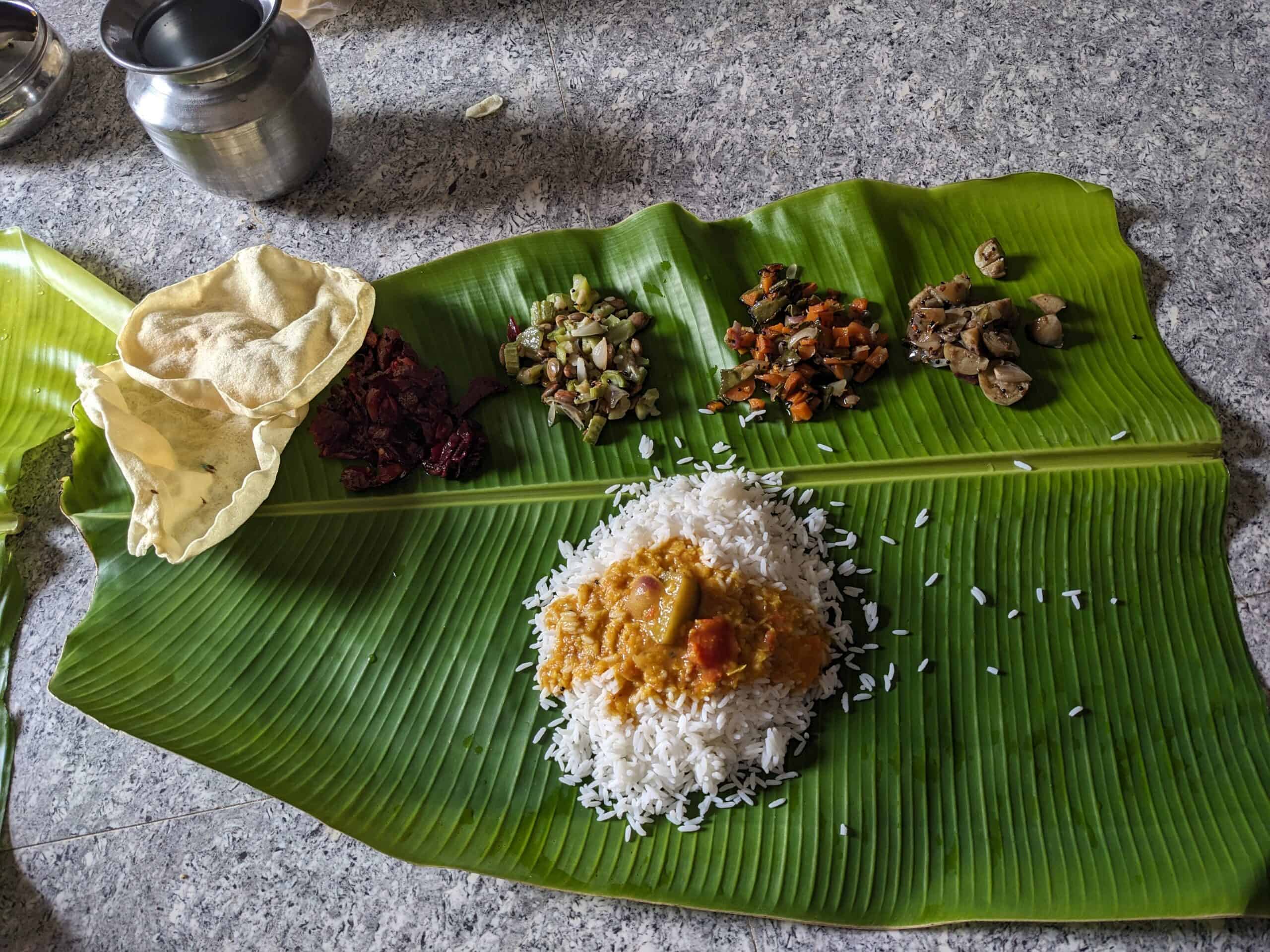
But what occurred to me to add is that along with hospitality, I’ve also been deeply moved by the practice of inclusivity that such hospitality can help cultivate and sustain.
In the village of Valayapatti, outside of Madurai, where I lived when I was first learning Tamil and to which I’ve been connected for more than a quarter of a century, people of many different lineages, communities, and spiritual traditions, including Hindus, Muslims, Christians, and atheists, practice the art of living together. Nobody hides their differences, but nobody makes a big deal of them either.
Far more important is living as a community, and finding ways to work through the inevitable conflicts and misunderstandings of human life.
The Same Leaf
Let me share an example of what I mean, the same story I was able to share in the interview for Sun TV.
Toward the end of my first extended stay in Tamil Nadu, after a year and a half of living in Valayapatti, I asked some folk musicians if I might record a selection of their songs, offering to pay them for their time and expertise. They agreed to doing a few sessions, which I recorded on a handheld tape recorder in the house that I rented.
The day before my departure we finished the last recording, and I paid them the amount they requested. Not long thereafter, I happened to see my landlord on the lane leading from his and my house to the center of the village.
He and his family had long since invited me into their lives, transforming me from being a mere tenant to being a brother and son in their home, so I addressed him as Appa, which means “father” in Tamil.
“How much did you pay them?” Appa asked.
“They asked this much, and I paid them this much,” I said.
But Appa didn’t like it. He seemed to feel I’d paid them too much and began to speak angrily, as if I’d done something wrong. From the beginning he’d been very protective of me, and in retrospect, he might also have been feeling upset that I was about to leave.
In that moment, however, I couldn’t bear the thought that he was angry with me, not when I had to leave the next day. I broke down in tears, right there in the middle of the lane.
He then went silent. Became still. And finally said, “Son, come home. Only if we eat off the same leaf will things be all right again.”
And we walked to his house–our house–and ate together from the same banana leaf. And things were indeed right again.
His invitation remains a light to me, an example of a way to return to our hearts.
May we all find ways “to eat from the same leaf” in our own lives and communities, especially in these divisive times.
The Sun TV Interviews
If you’d like to take a peek at the interview itself, the 12-minute interview as it aired during the primetime news hour and the complete 50-minute interview have both been posted on YouTube.
If you don’t know Tamil, you can ask YouTube to autotranslate them into English. It’s a bit spotty, but better than nothing!
The complete story I told above appears around minute 48:38 of the complete interview.
The 12-minute interview:
The complete interview:
Enticing Tamil Literature
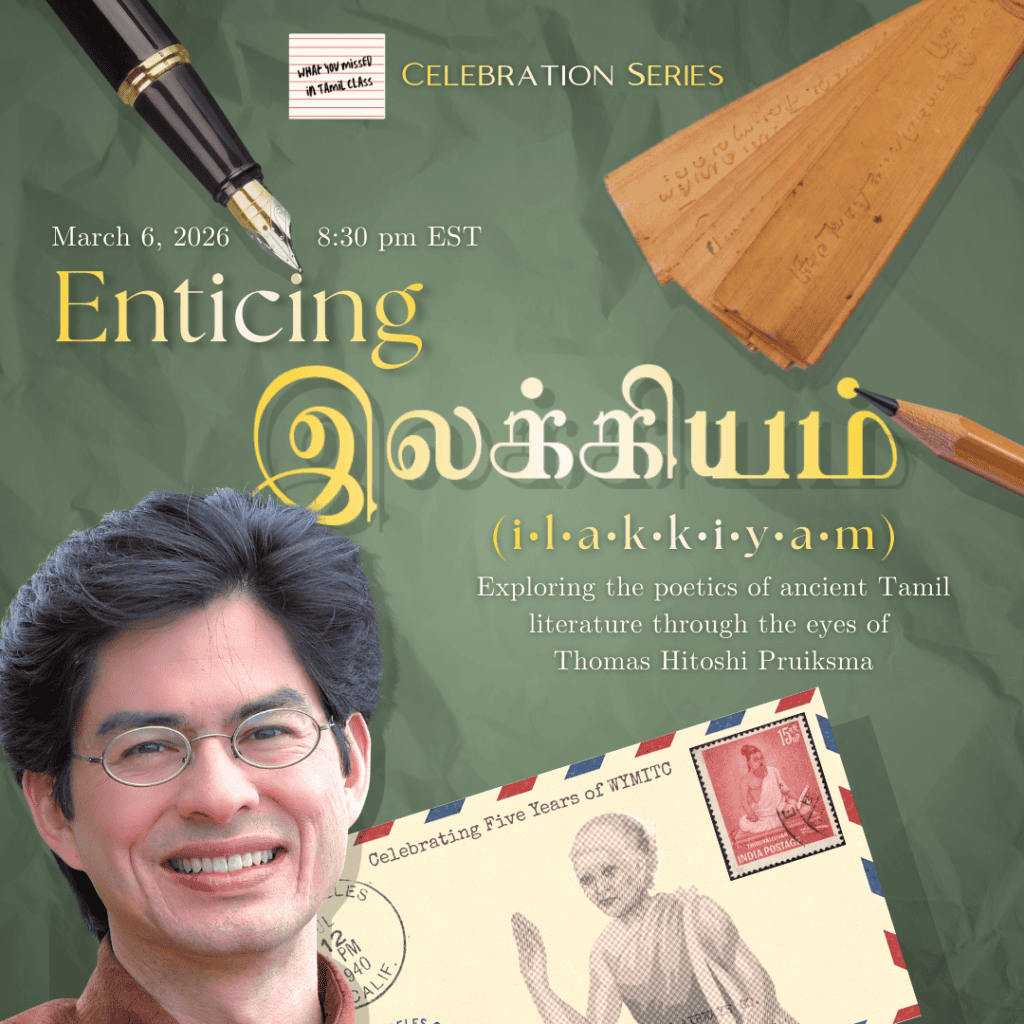
This Friday, March 6th, at 8:30pm Eastern / 5:30pm Pacific I’m delighted to offer a talk for What You Missed in Tamil Class about my journey into Tamil and poetry, the experience of translating works by Tiruvalluvar and Avvaiyar, and some reflections on how Tamil poetry can travel across languages.
The talk will be primarily in English and open both to those with a connection to Tamil and Tamil culture and to those curious to eat off a literary banana leaf with me!
No-Cost Registration Here
Work With Me One-On-One
I have a few openings this spring for people who may wish to work with me one-on-one on a creative project, the Tamil language, or a literary or philosophical exploration, through either a series of personalized sessions or a single in-depth exploration. You can learn more here: thomaspruiksma.com/work-with-me/
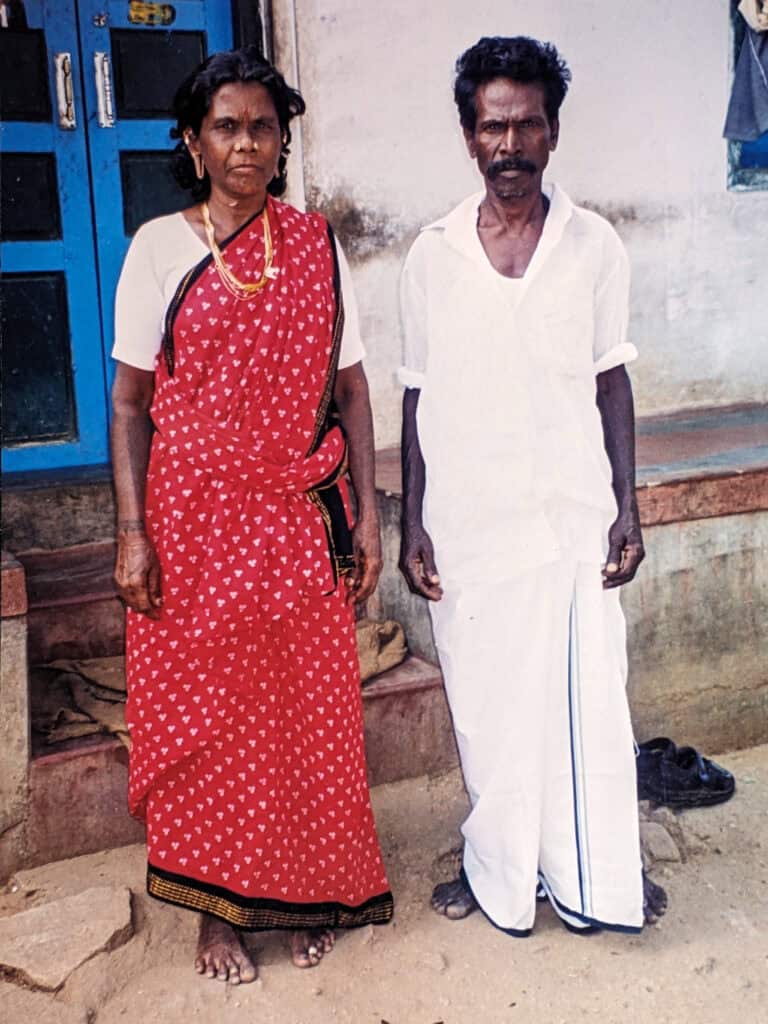
I cherish this way of teaching immensely. It allows me to offer something akin to what I’ve received from the astonishing teachers who’ve graced and blessed my life, sometimes over years and decades–not only writers and thinkers such as the farmer and poet Wendell Berry, but also my village Amma and Appa, who live on in my heart and continue to teach by their example.
Stay In Touch!
If you’d like to receive reflections like this one in your inbox, sign up for my newsletter.
Together we can explore what Ezra Pound calls “news that STAYS new.”