When I was a kid, I happened to watch a movie called Watership Down.
It was a tale of rabbits in search of a new warren, told through a beautiful form of hand-drawn animation.
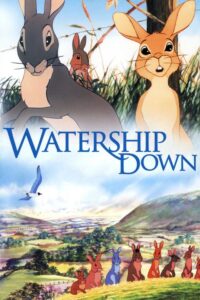
Even though I was only 6 or 7, I remember thinking that one day I’d like to read the book the movie was based on.
Well, that day proved to be only a few months ago, when I came across the book in a beautiful little bookstore in the town of Roslyn, WA, and had the impulse to buy it.
And while I don’t want to give away too much of the story–it’s a tale that’s as thrilling as it is moving, and as wise as it is surprising–I do want to share what I learned from my favorite moment in the book.
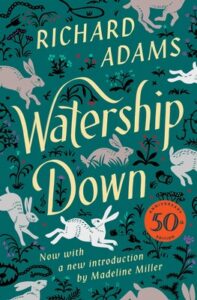
Hazel’s Vision
The moment comes near the end. Two warrens have found themselves opposed to each other. A rabbit named Hazel, the unexpected leader of the warren of Watership Down, whose adventures we’ve been following, has the inkling to make one last attempt at peace.
Wounded and tired, he leaves the safety of his warren to approach the camp of the rabbits of Efrafa, who’ve declared themselves their enemy. Against every expectation, he makes an astonishing suggestion to their warlord and leader:
“A rabbit has two ears; a rabbit has two eyes, two nostrils,” he says. “Our two warrens ought to be like that. They ought to be together–not fighting. We ought to make other warrens between us–start one between here and Efrafa, with rabbits from both sides. You wouldn’t lose by that, you’d gain. We both would.”
The Nature of Endurance
I wish I could tell you Hazel was able to change the warlord’s heart. Alas, he and his warriors attack the next day anyway.
But what’s so beautiful about the novel is that Hazel’s vision ends up enduring, just in a different way than we might have expected.
It teaches me something about the nature of vision as well as the nature of endurance. What matters is the vision itself. When we trust a true vision, our endurance–our persistence, our faith in that vision–will always be answered, often in ways we couldn’t have foreseen.
I know this from my own experience. When my Tamil teacher first hinted that I might undertake a translation of the Kural, he did it so gently I didn’t get even a hint of the hint. Somehow, though, he knew not to push. And somehow he was able to wait the twelve years it took for his suggestion to finally take root.
It’s the same attitude I now attempt to cultivate in relation to my own creative work and ideals.
And it’s one of the things I learned from the tale of these rabbits, when the day finally came for me to read it.
Stay In Touch!
If you’d like to receive notes like this one in your inbox, sign up for my newsletter.
Together we can explore what Ezra Pound calls “news that STAYS new.”